Life
“Improvisation is the soul of traditional music.
The written note is a memory aid, not a command.”
— From his essay ‘In the Field and at the Piano’ (unpublished, Irish World Academy archives)
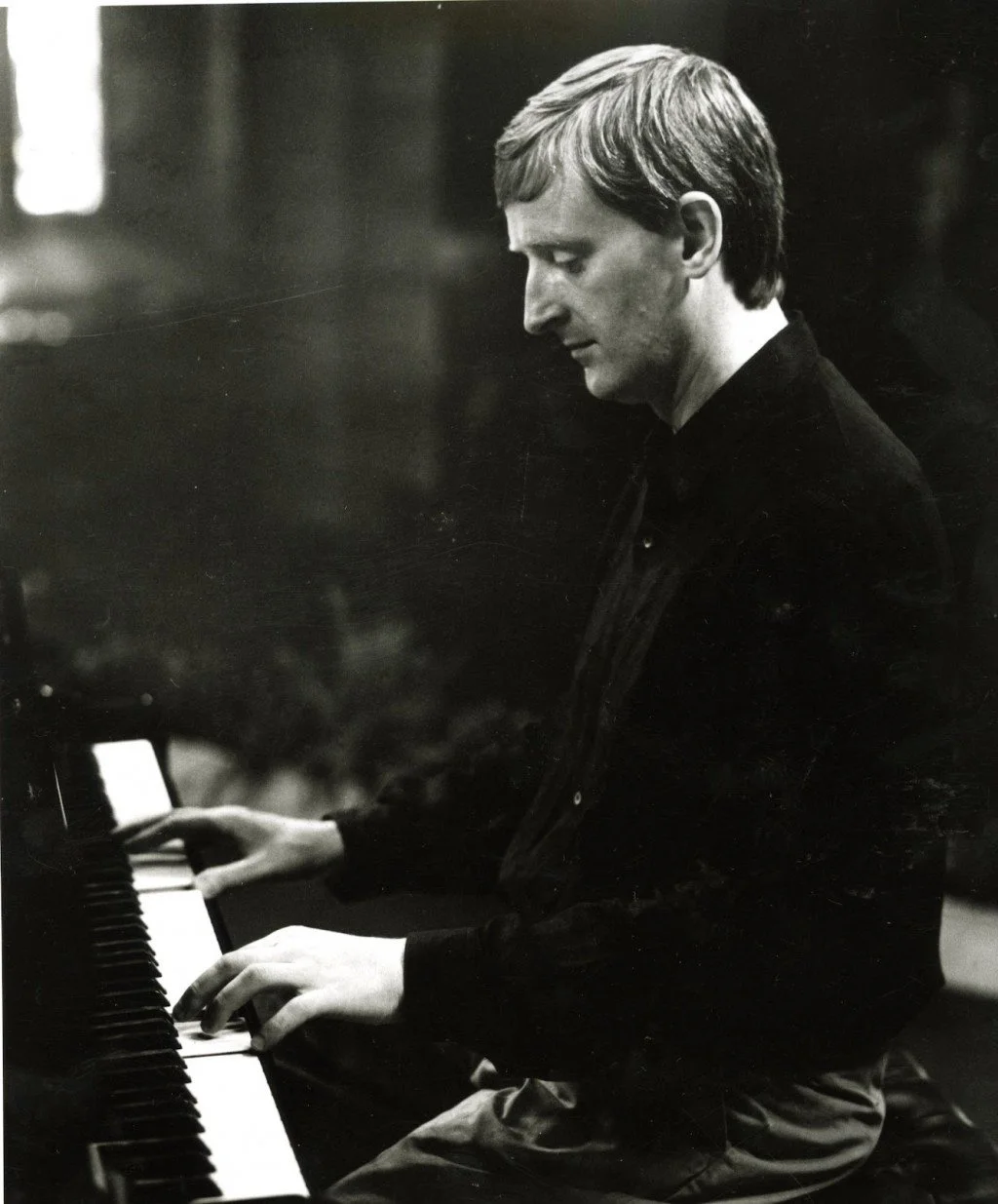
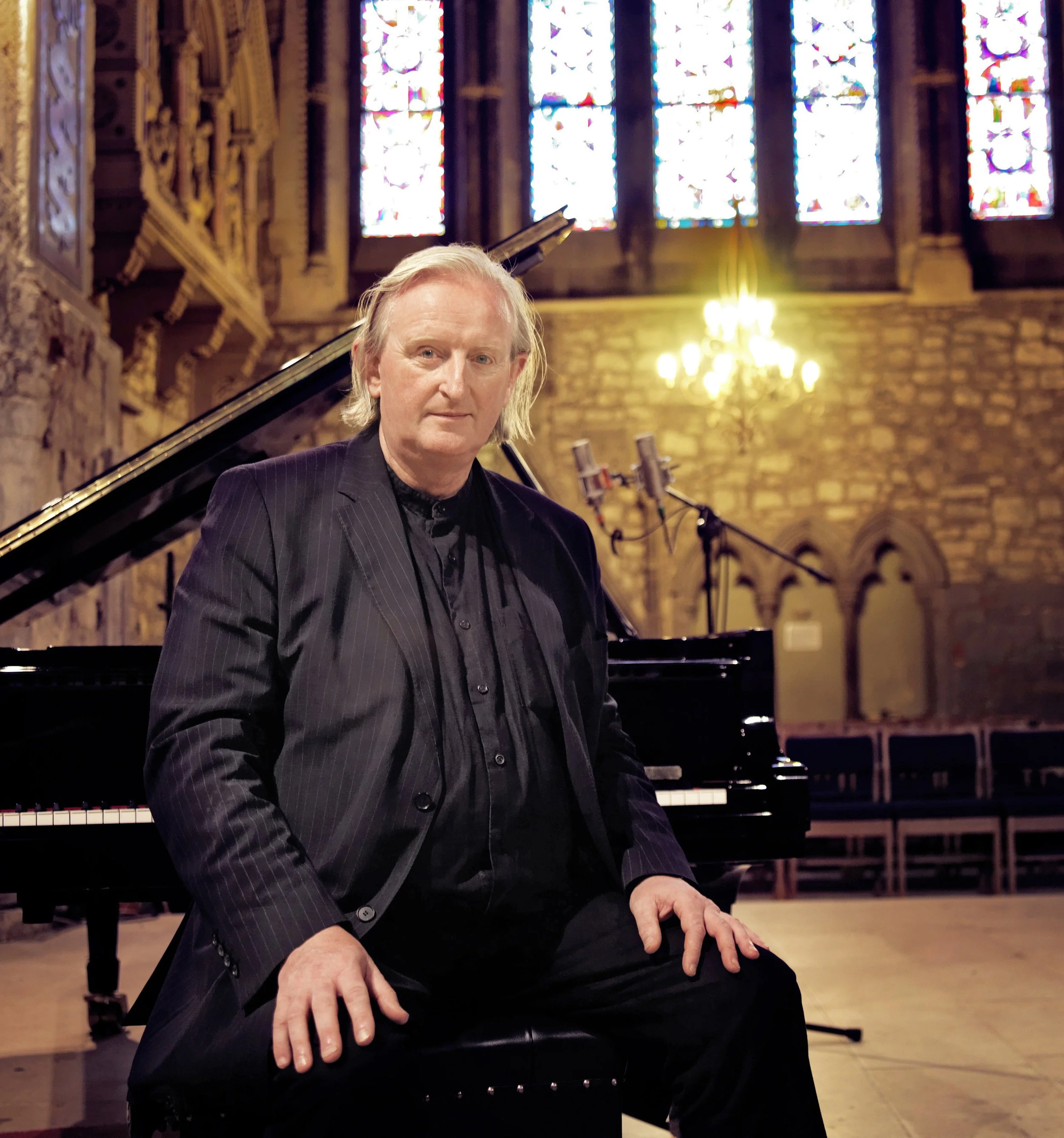
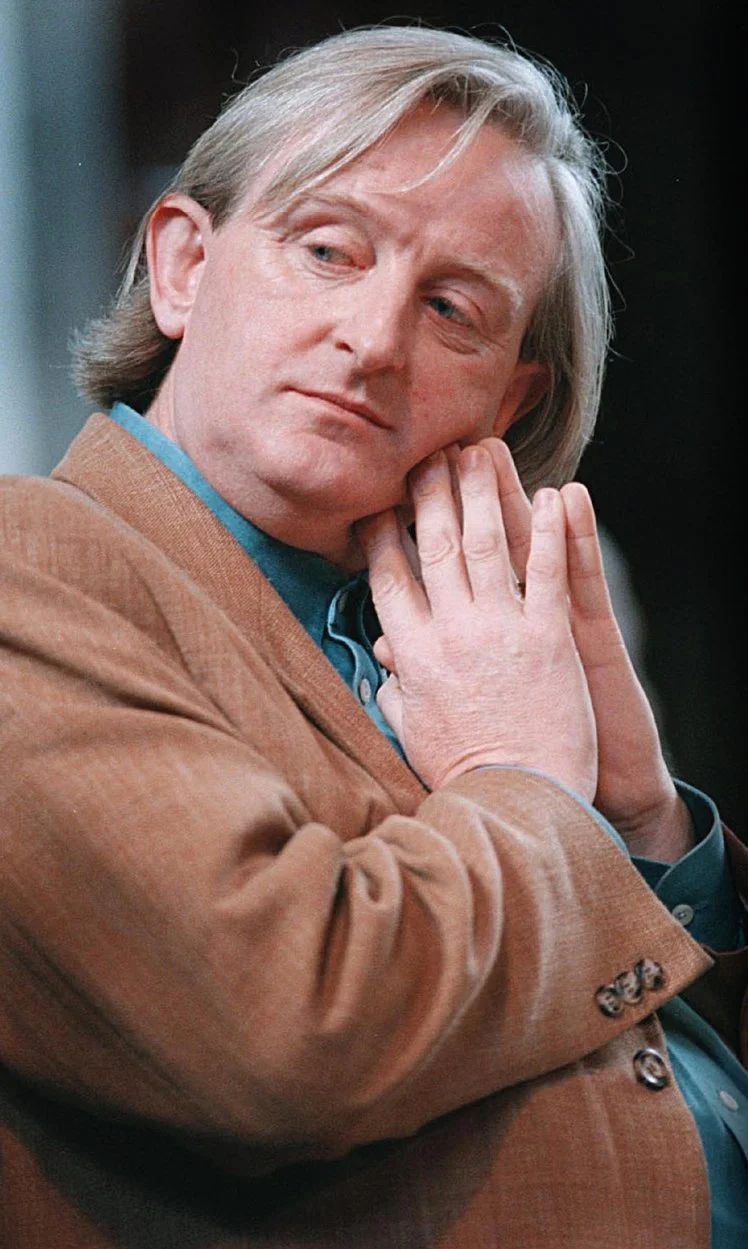
Professor Mícheál Ó Súilleabháin (1950–2018) was a distinguished Irish composer, pianist, academic, and cultural leader whose pioneering contributions reshaped the landscape of Irish traditional and contemporary music. Renowned for his innovative fusion of Irish traditional music, classical, and jazz idioms, Ó Súilleabháin’s legacy endures in his compositions, recordings, and transformative impact on music education.
Early Life and Musical Development
Recognised from an early age as a gifted musician, Mícheál Ó Súilleabháin pursued the piano as his principal instrument, developing a distinctive style that blended modal harmonies and ornamentation derived from Irish traditional music with elements of classical music and jazz improvisation. His early musical education took place under the Irish Christian Brothers and continued at the Music Department of University College Cork (UCC).
Furthering his interdisciplinary interests, Ó Súilleabháin undertook doctoral studies at Queen’s University Belfast, completing his PhD in 1987 with a pioneering ethnomusicological study of the Dublin traditional fiddler Tommy Potts. His academic mentors included Aloys Fleischmann, Seán Ó Riada, and John Blacking, whose influence informed his innovative approach to music and cultural studies.
Career as Composer and Performer
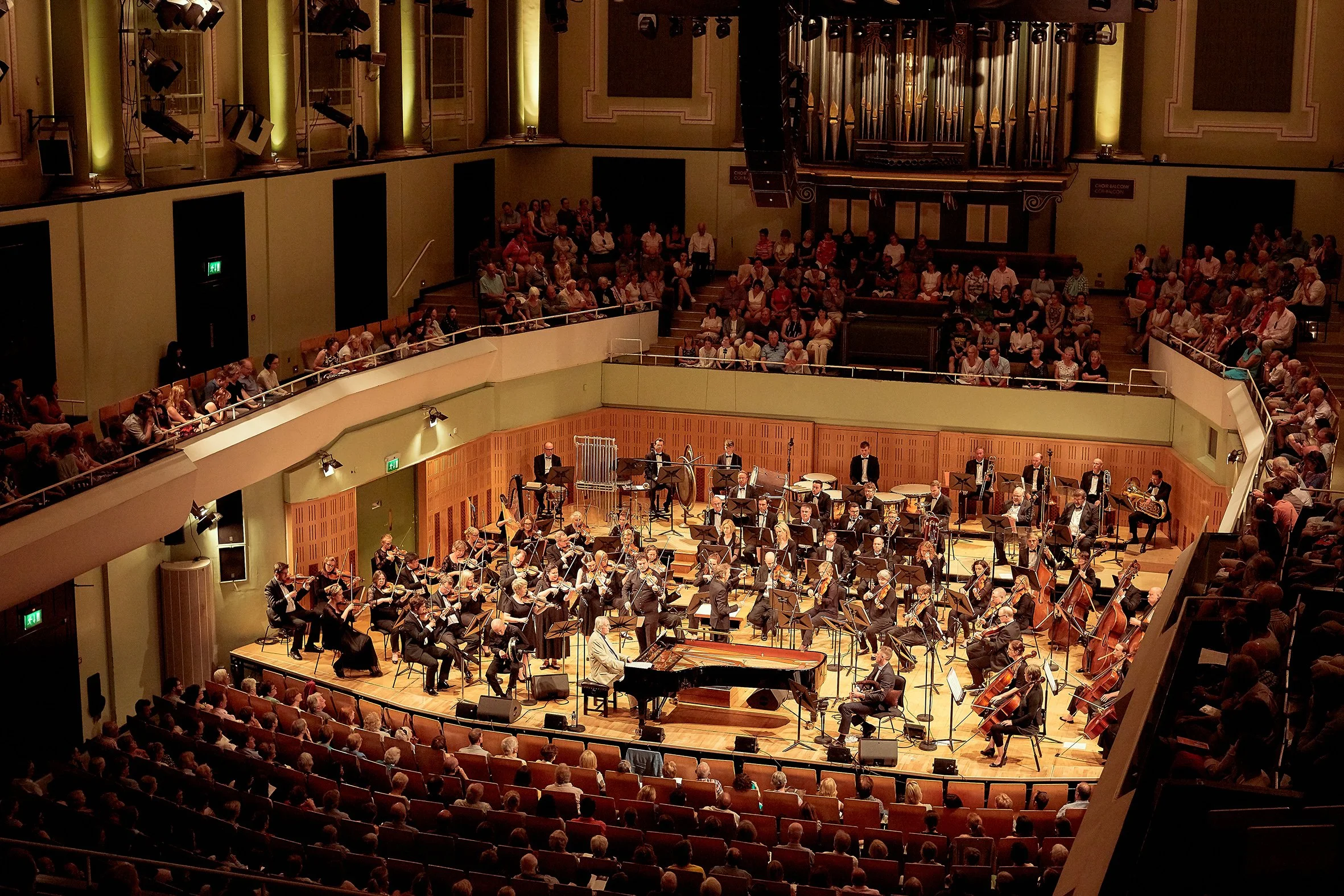
Over a prolific career, Ó Súilleabháin composed extensively for solo piano, voice and piano, piano with orchestra, and ensembles featuring traditional Irish instruments. His larger-scale works, such as Oileán/Island (1988), Woodbrook (1992), Templum (1994), and Becoming (1997), exemplify his ability to weave Irish traditional motifs into contemporary forms.
In addition to concert works, he composed and performed film scores, notably accompanying the restored 1926 silent film Irish Destiny in live screenings, demonstrating his commitment to historical and multimedia projects.
Ó Súilleabháin recorded thirteen albums between 1975 and 2010, beginning with his eponymous LP on the Gael Linn label and including landmark releases such as The Dolphin’s Way (1987) and Elver Gleams (2010). His collaborations spanned a wide range of musicians and ensembles, including percussionist Mel Mercier, singers Nóirín Ní Riain and Iarla Ó Lionárd, flute players Niall Keegan and Matt Molloy, saxophonist Kenneth Edge, and uilleann pipers Liam O’Flynn and Padraig Keane. He worked with ensembles such as Tiompán, the Irish Chamber Orchestra, the RTÉ Concert Orchestra, the Irish Symphony Orchestra, the National Chamber Choir, Hiberno-Jazz, and the Abbey Quartet.
Later in his career, Ó Súilleabháin developed a deep engagement with eighteenth-century Irish harp music, particularly the work of the harper-composer Turlough Carolan (1670–1738), arranging and performing his compositions.
Academic and Educational Leadership
Ó Súilleabháin’s academic career was marked by visionary leadership and innovation. Beginning as a lecturer at University College Cork (1975–1993), he revolutionised music education by designing entry routes and curricula that embraced traditional musicians without classical training, pioneering an ethnomusicological framework that has been widely emulated.
In 1993, he was appointed Professor of Music at the University of Limerick with the mandate to establish postgraduate programmes and research. There, he founded the Irish World Academy of Music and Dance—an internationally recognised institution dedicated to global music, song, and dance education. The Academy now offers over twenty-five programmes, attracting students from more than fifty countries. Under his direction, the Academy’s iconic building was constructed on the banks of the River Shannon.
Upon his retirement in 2016, Ó Súilleabháin was honoured as Emeritus Professor of Music.
Scholarly Contributions and Publications
Professor Ó Súilleabháin was an active scholar and editor, publishing numerous articles on Irish traditional music and ethnomusicology. He co-edited Bunting’s Ancient Music of Ireland (1983) with Donal O’Sullivan and completed the final stages of Aloys Fleischmann’s Sources of Irish Traditional Music c.1600–1855 (1998) as assistant editor.
He held visiting professorships at Boston College, where he established a traditional music archive, and the University of Notre Dame, Indiana. His academic distinctions include honorary Doctor of Music degrees from the National University of Ireland and the Royal Conservatoire of Scotland, an honorary alumnus award from Boston University, and the O’Donnell Chair of Irish Studies at the University of Notre Dame.
Cultural Leadership and Public Engagement
Mícheál Ó Súilleabháin was a dynamic cultural figure and committed public intellectual. He served two terms as Chair of the Board of the Irish Traditional Music Archive (1993–1999) and held board memberships with the Irish Chamber Orchestra, Dagda Dance Company, the UL Concert Hall, and the Contemporary Music Centre.
As inaugural Chair of Culture Ireland (2005–2014), he played a crucial role in promoting Irish arts internationally. He was honoured as Ard-Ollamh (Chief Laureate) at Fleadh Cheoil na hÉireann in Clonmel, 2006.
Widely regarded as a charismatic speaker, Ó Súilleabháin frequently delivered keynote addresses at conferences in Ireland and abroad, launched festivals and publications, and participated in radio and television broadcasts in English and Irish. A notable highlight was his role alongside Philip King and Nuala O’Connor in the 1995 RTÉ and BBC television series River of Sound, which traced the evolution of Irish traditional music.
Professor Mícheál Ó Súilleabháin’s enduring contributions to Irish music and culture continue to inspire musicians, scholars, and audiences worldwide.